

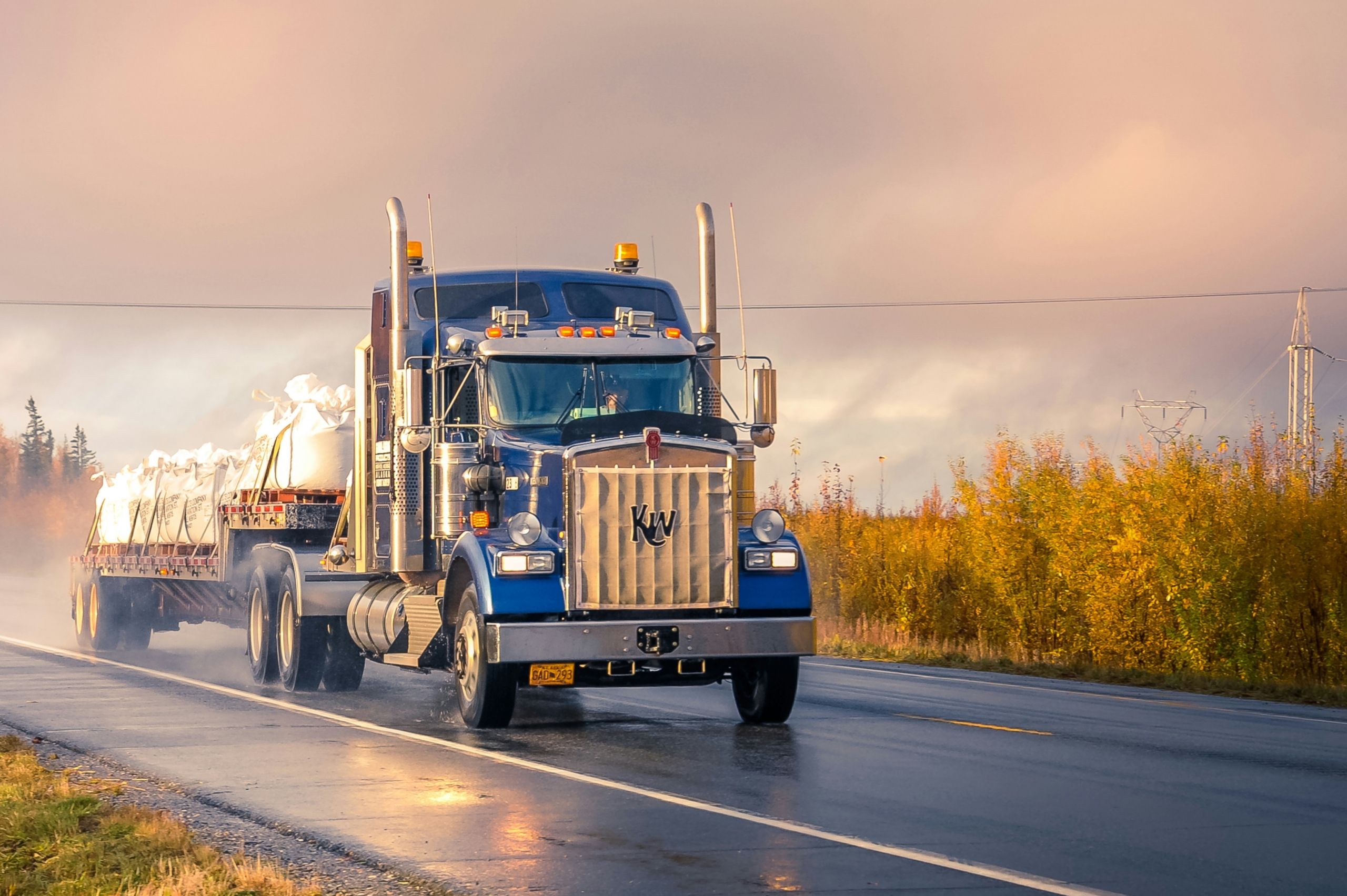
Semi-Truck Accidents on Utah’s I-15 and I-80: Are You a Victim?
Between I-15 and I-80, a vast amount of Utah’s freight passes through on a daily basis, with semi-trucks barreling through Salt Lake City’s tangle of interchanges, high grades to climb at Point of the Mountain, and exposed wind-swept flats of the Great Salt Lake.
Sharing the road with all this heavy machinery is a real risk, compounded by the sheer volume of vehicles. And when a passenger vehicle collides with one of those steel beasts, fully loaded, the outcome is disproportionate for the little guy. That also means the aftermath is also complicated.
Living in Utah, you know why these highways are so dangerous, so if you or someone you know has been injured on Interstate 15 or 80, it’s important to know your legal options. Having a lawyer in mind in your back pocket can substantially limit pain and suffering, and lead to a better road to recovery, sooner.
Why do I-15 and I-80 Have So Many Serious Accidents?
I-15 is the primary North-South freight corridor of the entire Mountain West, funneling trucks from California, Nevada, and Arizona on their way to Idaho, Montana and what lies beyond. Similarly, I-80 does the same for East-West, linking ports and distribution hubs of the Pacific coast to Wyoming, Nebraska, and across the broader United States as a whole. So when those two arteries meet in Salt Lake, you get congestion, constant lane changing, and dense merging that create conditions that challenge even the most seasoned and alert drivers.
Throw in the elevated terrain and you have yet another layer on that danger cake. Climbing through Parleys Canyon on I-80 and the steep grades found at Point of the Mountain on I-15 are cruel on brake pads and divide driver attention on the best and worst of days. And top it with winter storms, canyon winds and summer construction, and you have a margin of error that barely exists. There’s simply no way to expect that a fully-loaded tractor-trailer can stop, turn or react the same as a smaller vehicle with significantly less weight.
Injuries Are Almost Always More Severe with Trucks
Trucks are huge, heavy and have an off-set centre of gravity relative to their size. They don’t just crash and stop in many cases, they roll, collapse, and crush. These catastrophic conditions, when measured against a small vehicle like a car or motorcycle, most often result in a lot of human injury. Traumatic brain injury, spinal cord damage, multiple fractures, and long-term rehab. The result is that you miss work for long periods of time, incur intimidating medical bills, and face a glacial claims process.
It’s Rarely Just the Driver’s Fault in a Big Accident
People often assume that after a crash with a truck that it’s the driver at fault, but liability in a commercial trucking case goes much deeper than that. You have the driver, their employer, a motor carrier company, and so forth where responsibility can be compounded. There are a hundred small decisions that lead to the crash, and a whole chain of decision makers, all with their own insurance for liability. Some can be independently negligent for decisions that lead to the crash, like ignoring safety checks or cutting corners. Companies that force their drivers into unreasonable working conditions, having a poor safety record, skipping maintenance, and ignoring required rest stops are just a few of the variables we look at.
Federal regulators take these standards seriously. The Federal Motor Carrier Safety Administration enforces safety requirements that carriers are required to follow and imposes heavy penalties when they don’t. If a carrier violates those standards, that becomes a chain of evidence that gets presented in court.
Freight Brokers Are Now Being Held Liable
A recent and important change in trucking liability law came about in 2026, directly impacting victims on Utah’s Interstates. This change turned the lens on freight brokers, aka the companies that arrange shipments without owning trucks or employing drivers. For the longest time it was argued that federal law shielded them from state personal injury claims, but that all changed with the U.S. Supreme Court issued a unanimous ruling with the case of Montgomery v. Caribe Transport II, LLC, recognizing that negligent-hiring claims against brokers does warrant a safety exception.
What that means, practically speaking, is that a freight broker who knowingly matches a shipment with a carrier that has a history of safety issues, a conditional safety rating, repeated violations or a pattern of poor maintenance, can now be held accountable under state law. This opens up additional insurance policy coverage which is above and beyond the truck owner or carrier’s coverage. That is layers of insurance and compounding payouts.
Other Parties Who are Party
Owner-operators and leasing companies lease the trucks most of the time, so a trucking company doesn’t have to own the fleet outright. It makes financial sense for them. That means they have trucks coming from all over, in all kinds of condition, age, and maintenance. Sure, they have to safety check them, but sometimes that is rushed or outsourced. Then there is cargo loading, which many people never consider. If that cargo isn’t secured or if the truck is overloaded, you have the perfect conditions for a jackknifed trailer, rollover, or highway spill. And that’s why we have federal cargo securement standards.
When equipment fails, due to things like defective brakes, tires or steering, a routine highway drive can turn catastrophic in an instant. A manufacturer can bear responsibility if the cause was a mechanical defect. Throw in bad signage, bad road design, or bad maintenance by a state or municipal agency, and you have the potential for a lot of bad actors.
You can review the statewide crash data and commercial vehicle enforcement activity tracked by the Utah Department of Public Safety, which covers regional trends.
What This Means in Your Case
With each strata of potential liability, including the driver, carrier, broker, equipment owner, cargo loader, manufacturer, state agency, and more, there is another source of potential compensation. Compensation you will need for medical bills, lost income, pain and suffering, and long-term medical care.
The way a case gets organized should include all driver logs, safety records, maintenance history, and broker communications, and that’s just the foundation. Because we specialise in trucking cases, we understand better than anyone how to leave no stone unturned.
The law around trucking accidents is constantly changing. The Montgomery decision from this year shows that nothing is set in stone, and keeping on the cutting edge of legal changes means we have the advantage in court. Victims benefit most when their case is built with knowledge and a thorough approach.
How You Protect Your Claim After a Truck Accident
If you found yourself on this page because you were in an accident with a semi-truck on the I-15, I-80, or any other Utah highway, the steps you take early on can be the difference of thousands of dollars. You need medical care, and you don’t need stress about how you’re going to pay for it. You need a new car, and insurance won’t cover what you lost completely.
Make sure you preserve all evidence from the scene, and under no circumstance should you deal with the driver or companies alone. They have very expensive and expansive lawyers, and you are one person. You need a team who have your back.
This article is provided for general informational purposes and does not constitute legal advice. If you’ve been injured in a truck accident, consult with a qualified attorney about the specific facts of your case.